By Tesco Equipment LLC Editorial Team · Updated 2026-08-10
If you’re responsible for maintenance, catering, and sanitization, you need equipment you can trust every time it goes into service. Aircraft maintenance lifts are hydraulic scissor platforms built for exactly that. Whether it’s used for inspection, repair, and servicing work at height, the safety of crew and merchandise is secure. We build these maintenance lift systems ourselves in Coral Springs, Florida, drawing on more than 80 years of engineering experience to meet ANSI and SAE standards, and we support MRO facilities like yours across everything from regional jets to wide-body aircraft.
Key Takeaways
We build airline maintenance lifts with precision engineering that meets aviation industry safety standards. This builds trust in every unit on your tarmac fleet.
With more than 80 years of hydraulic lift engineering behind us, we design and manufacture from our own facility in Coral Springs, Florida.
Our aviation ground support equipment has earned a trusted vendor status with major carriers, including American Airlines, JetBlue, Delta, and FedEx.
We deliver standardized maintenance lifting platforms for most airline ground support equipment applications, and we can build trucks to your operation’s needs.
Why do Aircraft Maintenance Lifts matter so much?
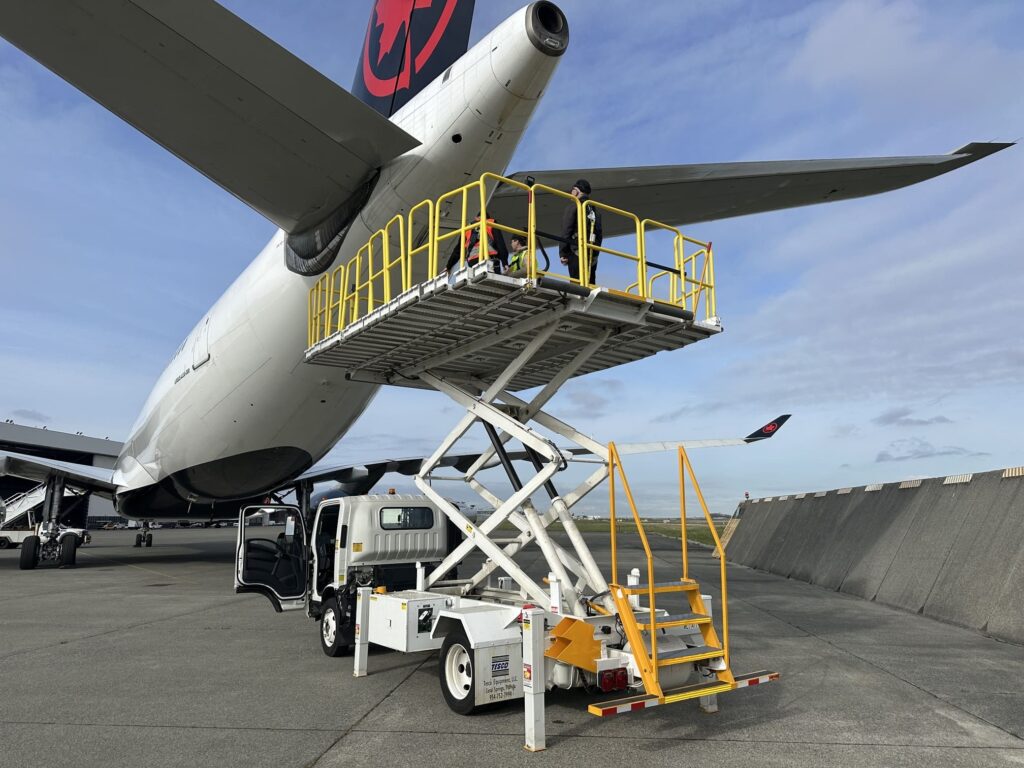
Safety drives every decision you make on the tarmac. Aircraft maintenance lifts protect your technicians from injury and shield your aircraft and tarmac components from damage during removal, transport, and installation work.
A dropped panel or an unstable platform costs you more than downtime. It puts your maintenance worker’s safety at risk and forces a costly rework of certified parts. Protecting your crew, protecting your customers, and protecting your aircraft is the same job. That’s why detailed engineering of our aircraft maintenance equipment sits at the center of every MRO safety program we support.
We design and manufacture hydraulic lift systems for aviation, railroad, municipalities, and industrial applications, drawing on more than 80 years of engineering experience. We build airline GSE equipment designed to perform under repeated industrial, high cycle use to meet your operational demands, not just for occasional service. That distinction matters if you’re a Facility Director or Procurement Manager are weighing equipment life cycles against maintenance budgets.
What Makes a Lift Platform Suitable for MRO Work?
Suitability comes down to stability, reach, and component protection under load. Aircraft MRO work platforms need to hold position precisely at height for you. Our lift platforms are rated for 3,000 to 5,000 pound loads. Even minor drift during engine maintenance, restocking, or sanitization tasks raises your risk of contact and damage to crew or aircraft. Our lifts are stabilized and engineered to compensate.
Do All Hydraulic Lifts Qualify as Aviation-Grade?
No. Aviation scissor lifts and dedicated aircraft maintenance lifting platforms differ from general warehouse equipment because we engineer them around airframe geometry and hangar operating conditions.
If you treat ground support equipment maintenance as a core safety discipline rather than an afterthought, you’ll cut both personnel risk and aircraft downtime. Do you wish to have this trade-off? Is it not worth prioritizing safety standards at every MRO station you run?
What makes Aviation Scissor Lifts different from Standard Lifts?
Aviation scissor lifts have to answer a stricter set of demands than any warehouse or construction model ever faces. Your aircraft skin, avionics bays, and engine nacelles tolerate almost no contact error, so we build airline maintenance lifts to tighter tolerances for safety, durability, and performance. Standard industrial lifts simply weren’t engineered for that level of precision around a fuselage.
We build our aircraft maintenance lifts around this reality. Our production floor offers standardized platforms for most of your tarmac tasks, alongside customized units when your maintenance requirements are unique. A regional jet inspection calls for different reach and deck geometry than a wide-body engine change, and that flexibility is what separates true airline GSE equipment from repurposed general industrial machines.
Aircraft MRO work platforms also carry a compliance burden standard lifts skip entirely. Our engineering processes comply with ANSI and SAE standards, and every unit you receive passes through multiple inspections by engineers, skilled technicians, and a Quality Control Manager before it reaches your hangar floor.
Features
Standard Industrial Hydraulic Lift
Aviation-Rated Scissor Lift
Forward Deck platform contact surface
Aircraft safe, non-marring barriers
Standards compliance features
Varies by region for fleet requirements
ANSI and SAE
2-way or 4-way platform Configuration
Fixed platform
Standard or custom options
In-depth Inspection checklists
Multiple technician/engineer/quality control checks
Do Aviation Maintenance Lifts Need Special Certification?
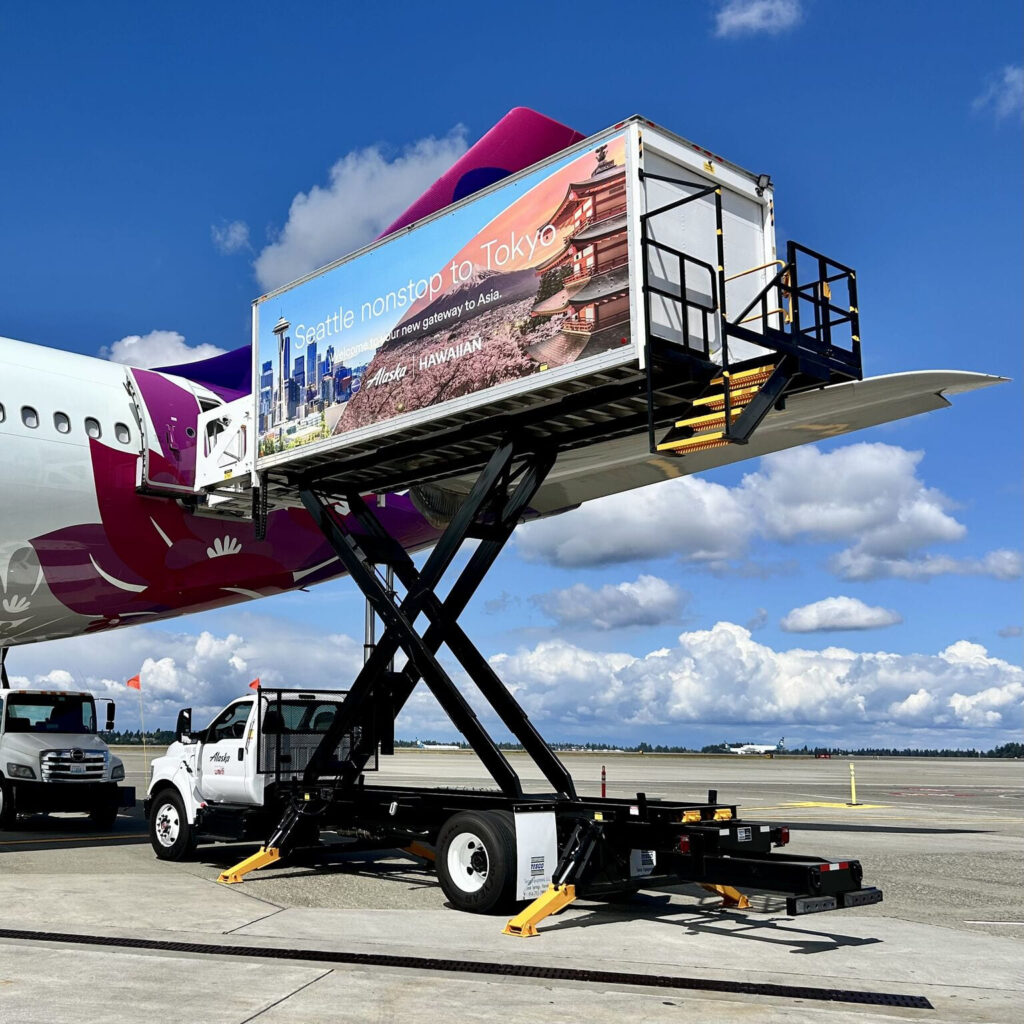
Yes. If you’re operating aircraft maintenance lifting platforms near active aircraft, you need documented compliance with ANSI and SAE standards, not just general OSHA hydraulic lift ratings. Multiple inspections by qualified technicians, engineers, and a quality control manager confirm the safety standards of each unit before it ships to you.
Why does Ground Support Equipment Maintenance matter so much?
Consistent ground support equipment maintenance standards keep your lifts performing safely across high demand hangar and ramp environments, year after year. Every system we build is designed to meet strict industry standards and hold up under the continuous operational pressure your team puts on it.
How do MRO work platforms support safe Airfcraft access?
Aircraft MRO work platforms give your technicians stable, elevated access to fuselage, wing, and empennage surfaces without compromising structural clearance or crew safety. Leading MRO organizations across North America rely on precision built hydraulic systems like ours, day after day, and we design each unit to meet the tight tolerances your airframe work demands.
Our approach starts with aircraft maintenance lifts built through custom fabrication and scaled into full production runs. That process lets us shape hydraulic solutions around your facility’s specific hangar layout, fleet mix, and access requirements, rather than forcing a one-size-fits-all platform onto your operation. The result is equipment that fits your real MRO workflows, not generic specifications.

What keeps Aviation Scissor Lifts safe over time?
Safety on aviation scissor lifts depends on consistent inspection, not just initial build quality. Regular inspection confirms that hydraulic seals, structural welds, and lifting mechanisms keep performing to standard long after installation. The importance of catching wear before it turns into a safety incident on your ramp.
Who builds and supports these Aircraft Maintenance Lifting Platforms?
Our engineering and production team handles your aircraft maintenance lifting platforms in-house, from first drawing to finished unit. When we design and fabricate under one roof, so you get a shorter distance between engineering intent and what actually reaches your shop floor.
Airline GSE equipment procurement teams get platforms built around three priorities:
- Tailored hydraulic configurations matched to your specific aircraft types and hangar constraints.
- Ongoing inspection support that protects safety and extends service life.
- In-house engineering oversight from design through delivery.
Ground support equipment maintenance programs run smoother when the manufacturer stands behind every unit with direct engineering accountability. That’s the standard we hold ourselves to.
What keeps Ground Support Equipment Maintenance on schedule?
Coordinated equipment systems and dependable after sales support keep your ground support equipment maintenance programs running on time. Downtime rarely comes from a single failed component. This comes from mismatched tools, delayed troubleshooting, and lifting equipment that can’t handle the job in front of it. We build our schedules around eliminating those gaps before they cost you valuable production time.
Engine work illustrates the point well. Engine slings and hoists function as a coordinated system rather than standalone tools. The hoist delivers lifting power and control for heavy powerplants. The sling distributes engine weight evenly across the frame, preventing stress on the engine and the surrounding structure. When either component is undersized or mismatched for your job, that stress transfers straight into your airframe components and into your operational timeline.
What role does after-sales support play in scheduling?
Support after delivery determines whether aircraft maintenance lifts stay productive for you or sit idle awaiting repair. Programs that include:
- Ongoing maintenance support.
- Rapid troubleshooting response.
- Direct issue resolution assistance.
This program keeps your equipment cycling through service rather than parked in a corner of the hangar.
We support critical operations across North America with precision built hydraulic systems and responsive service. These industrial systems are professionally engineered and paired with dependable field tested support, which is what keeps your maintenance schedules intact.
How should MRO Teams choose Maintenance Lifting Platforms?
Selection starts with matching platform capacity, reach, and certification to your specific airframe and task. If you skip this step, you can end up with aircraft maintenance lifts that can’t reach wide-body engine pylons or lack stability for wing-panel work. We build for every hydraulic maintenance lift solution. The initial fabrication through full-scale production supports your actual operational requirements, not a generic unproven spec sheet.
Four factors separate a durable investment from an equipment liability:
- Certification and standards compliance for the specific aircraft categories you service.
- Training support that keeps your crews current on ANSI-aligned operation and inspection procedures.
- Manufacturer location and shipping capability for your domestic or international fleet.
- Long-term reliability engineered into the platform rather than added later.
Why Does ANSI-aligned training matter for Lift Operators?
Training programs built around ANSI standards give your maintenance crews a working understanding of proper operation, maintenance, and inspection routines. Teams without this grounding face a higher risk of procedural errors during elevated work, which threatens both technician safety and airframe integrity. Well-trained crews get more consistent, longer service life out of aircraft MRO work platforms.
Does the manufacturer’s location affect Equipment Support?
Location shapes how quickly a manufacturer responds to your fleet’s needs. Operating from Coral Springs, Florida, we’re positioned to support your domestic MRO operations and international airline procurement alike, coordinating delivery and service without the delays common to overseas only suppliers of airline GSE equipment.
Every system that leaves our facility is engineered to meet strict industry standards, built to withstand the daily ground support equipment maintenance demands of your high-traffic terminal environment. Whether you need aviation scissor lifts for cabin service or full aircraft maintenance lifting platforms, that engineering standard doesn’t shift based on your order size or destination.
FAQ
Why are aircraft maintenance lifts important for MRO safety?
They protect your technicians from injury and shield your aircraft and components from damage during removal, transport, and installation work, preventing costly rework and reducing risk to your maintenance crew.
What qualities make a lift platform suitable for MRO work?
Our suitable platform holds position precisely at height with strong stability with our safety interlock and metered reach. Drift during tasks like engine or panel work raises your risk of contact damage.
How do aviation scissor lifts differ from standard industrial lifts?
We engineer aviation scissor lifts specifically around airframe geometry. Your aircraft skin, avionics bays, and engine nacelles tolerate almost no contact error, unlike standard warehouse equipment.